
Art For Whom 01
Art Is Everywhere. So Why Do So Many People Miss It?

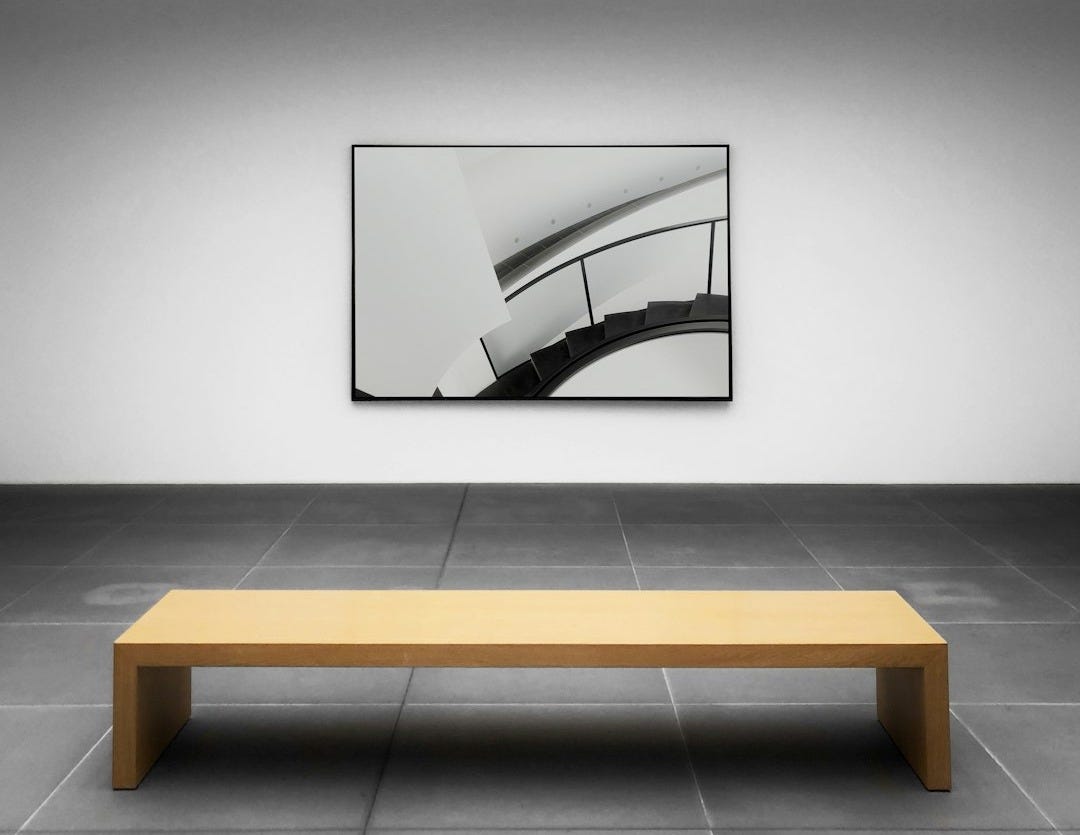
Before speaking about the aura that an original work offers in the experience of an exhibition, I would first like to talk about accessibility and equality regarding access to art and cultural exhibitions.
Since the concept of art appreciation first took shape, it was a kind of privilege reserved for particular people, with an implicit agreement that certain conditions had to be met, such as financial stability and sufficient social status.
Even now, I still see those kinds of limits in the art scene, in terms of both appreciation and accessibility, although we say there are no barriers to entering a gallery or museum. This applies to both artists and general audiences who engage with artworks in these spaces. But today, I would like to talk about the latter, and how that limitation can affect our society as a way of living together in community.
I know there are surveys already conducted about accessibility to galleries and museums, aimed at enhancing the visitor experience. The majority of barriers cited are distance and weather, especially in Canada, followed by transport, time, and money, as far as I recall.
In Canada especially, the winter season is long, roughly five to six months, and that season is genuinely tough for most residents, including me. There may simply be no going out and enjoying something beyond your door. That is what drives us to make the most of every remaining season, including the beautiful summer, as if we have to make up for lost time.
Beyond weather, distance and transport present another significant barrier. Most major exhibitions, events, and festivals are held in large cities, and for many people, access is limited not only by logistics but also by the flow of information itself, especially across a country as vast as Canada.
So, what does this actually mean? Is it merely a matter of inconvenience and limited access to cultural life?
Several studies have suggested that engagement with literature and the arts can strengthen perspective-taking and empathy, even though the relationship is complex and difficult to measure directly. Nevertheless, what I have been thinking about is also how a lack of cultural experience could shape or erode social capacities like empathy, and how it may even connect to various social issues such as violence, social isolation, and everyday conflicts.
Do you think I am standing too far from reality?
I have not conducted formal research on concrete data myself, but I do believe that cultural experiences, reading, drawing, appreciating art, encountering something genuinely mind-blowing, understanding another soul’s inner shape and distance, carry a quiet but powerful social weight.
That is one of the reasons I have been dedicating myself to an online exhibition platform, and planning to create art-history exhibitions for both local artists and our neighbourhood, beyond the constraints of distance.
To come back to where I began, I am deeply interested in accessibility and equality in art and cultural experience within our communities. And I believe it is one of the most fundamental ways to prevent and even begin to resolve the inhumane behaviours quietly growing within our social fabric.
And this is where I believe digital technology can play a role that we have not yet taken seriously enough. We talk about digital innovation in business, medicine, and science, but rarely about what it could mean for art and cultural life. Even with its limitations, and I acknowledge there are many, digital may be the most honest path we have toward making art and culture genuinely reachable. Not as a replacement for standing in front of a real work, but as a door that was never there before.
This is what Art For Whom is about. And this is just the beginning.
That is part of why we built Artistry Community, a nonprofit online exhibition platform dedicated to bringing local artists and their work directly into the neighbourhoods and lives of people who might never otherwise encounter them.
It begins with a simple belief: that access to art and culture is not a luxury. It is something we owe each other.
So I want to leave you with one question.
When did culture last make you feel less alone and how far did you have to go to find it?